Nonfiction Reading Response Questions for Middle School
Common Core Standards have required that English courses for older students have a heavy emphasis on informational texts. The problem with this mandate? Informational texts aren't ever enticing to reluctant readers, nor are nonfiction reading response activities.
Even so, comprehending, analyzing, and reflecting on nonfiction is an important life skill. When approached intentionally, lessons tin can be enjoyable, meaningful, and memorable for teens. The fundamental to success is finding means to get students to dig deep while engaging them and scaffolding learning.
In this postal service, y'all'll find specific nonfiction reading response activities to use with junior high or loftier school classes.
Setting the Stage
Earlier asking students to analyze nonfiction, I've found it helpful to teach them most the reading skills I'll be asking them to apply, and I give them an introduction to informational texts.
During reading strategies units, I effort to comprise as many high-interest nonfiction articles every bit possible. My favorite sources are Common Lit, Newsela, New York Times Upfront, Scope, TED Talks,and any recent and relevant news article I tin can discover. I want my students to sympathize how to navigate and apply the text features, to be equipped with the tools they need to summarize and analyze them confidently, and to know how to think critically and evaluate them rather than passively accepting everything they read.
Introducing students to reading strategies and informational texts at the commencement of the year gives me a film of their current strengths and weaknesses as readers. Information technology also sets the stage for my expectations for them beingness active readers throughout the yr.
Many of my favorite nonfiction reading response lessons from this unit of measurement follow a similar structure. They include all or most of these elements, depending on the fourth dimension we have bachelor and the complication of the text:
Activate Background Knowledge
In lodge to appoint students in a meaningful reading of a nonfiction text, they demand to care about the topic. One of my favorite approaches for gaining students' interest is through a video clip. I like to prove them how the topic is relevant either to their life or in today's world (their globe!).
For case, before reading nigh the triangle manufacturing plant fire, spotter this CBS video clip and discuss the responsibility the United States has to exist aware of the working conditions of their suppliers. Ask, Should the Us refuse to purchase habiliment from countries that practice not ensure prophylactic of their workers? How might this decision touch on us on a daily ground? When students realize they are talking nigh some of the very wearing apparel they are wearing, many volition accept a vested interest in the topic.
Close Reading and Annotation
With circuitous nonfiction, atomic number 82 students through the process of previewing text features in order to make an educated prediction. Then, read the text out loud with students the showtime fourth dimension through. Pause and summarize, and model for students how to ask questions or offer comments. As you lot read, work on monitoring predictions, adding to them and altering them equally necessary.
After the initial read, ask students to rummage back through a second time with a purpose. Equally they practise, they . should annotate the text with specific questions in mind. For example, they might look for new vocabulary words they would like antiseptic, jot notes about what surprised them, and question the validity of the data. This first step of responding to the text is personal, and it helps students focus on basic comprehension.

Follow-Up Action
Don't let the annotation process to drag on. Students become bored quickly. If there are any reading strategies we don't go to cover thoroughly during the first round of our close reading, incorporate them into a second activity, which students tin can complete in small groups or with a partner.
With nonfiction, try using a dice lath full of questions that span a diverseness of depth of knowledge levels. Students curl the dice, hash out the respond with their peers, and ask questions if they need description. During this time, the teacher is able to walk around the room, carefully listening for misunderstandings and skills that are tough for my students. We can turn those into follow-upwards mini-lessons – bonus!
Comprise Movement
Afterward thinking through the significant of the text, enquire students to develop an opinion. Getting students up and moving has obvious benefits. One approach is to write a question on the lath. And then, draw a continuum. Have students place a glutinous note on the continuum to bespeak their opinion on an issue or understanding/disagreement with a statement. Ask for volunteers to discuss their thoughts.
I've besides asked students to consummate carousel activities. Basically, that ways y'all place large Postal service-It easel pad sheets around the room. On each sheet, write a question, or students generate the questions in pocket-sized groups. They they broadcast around the room with their several others. They hash out the question, and then one person writes a response. After all groups accept answered all questions, review the responses every bit a course.
Extension Activities
I've used a variety of methods to ask students to respond to nonfiction texts both verbally and in writing. 1 of my favorites is to use chore cards equally writing and discussion prompts. I'll ask students questions that require them to recollect critically, like:
- What information would you include in an Insta story or Facebook live video about this commodity?
- What symbol would all-time represent the ideas presented in this text?
- How would yous best capture the meaning of this text in exactly six words?
You tin likewise ask students to take the information from a factual text and create an infographic, a one-pager, or a creative combination of the two. Students frequently love tasks like this considering they can be completed artistically on paper, on the computer, or with a different medium. Plus, they can pull from information they take discussed during the previous exercises when completing this extension activity.
When I outset began incorporating more than nonfiction, I was less than enthused. (Major snooze fest.) Now, I expect frontwards to finding new nonfiction articles and informational texts. When I'm watching the news or reading a magazine, I'm always on the sentinel for fresh textile to pique students' interest. Nonfiction reading response can be rewarding and meaningful. Students have a difficult time disliking a lesson when their instructor is passionate near it.
If you're looking for more than guidance regarding incorporating nonfiction texts, check out Linguistic communication Arts Classroom. While I do this, she does that.
READ Adjacent:
- Summarizing Nonfiction: A Lesson Plan
- Teaching Students to Read Visual Texts
- Comprehension Strategies for Struggling Readers
RELATED RESOURCE:
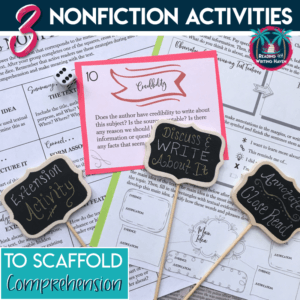
Hither are three nonfiction activities to utilise with whatever nonfiction article. They are scaffolded to move students from basic comprehension to a more than analytical idea procedure.

Source: https://www.readingandwritinghaven.com/nonfiction-reading-response-lesson-secondary
0 Response to "Nonfiction Reading Response Questions for Middle School"
Enregistrer un commentaire